Posts

GOLD - making of Jewellery
Image
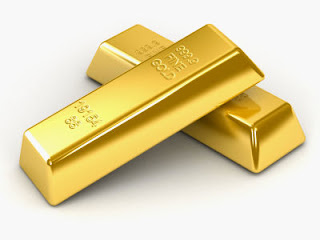
Details of what is gold and how or why Gold Jewelry is made in different Karats: The gold used in jewelry contains alloys. Various karat weights, including 10k, 14k, 18k and 22k, contain part zinc, copper, silver, or palladium. 18K gold is 750 percent pure, with 250 alloys added. Gold: Gold is a type of Precious metal whose chemical symbol is AU Temperature: The melting temperature of Gold is slightly lower than that of copper at 1945 ° F or 1063 ° C ( Iron is 2802°F and Copper is 1981°F ) Specific Gravity: of gold is 19.32 Density: One cubic inch of pure gold weighs 10.18 troy ounces. Weight: Gold for Jewelry purposes is weighed in Grams, Pennyweight (DWT) or Ounces (troy) 1 Troy ounce is equal to 31.10348 grams or 20 DWT (pennyweight) 1 DWT (pennyweight) is equal to 1.555 grams or 0.05 troy ounces. Karat: The most popular jewelry made in gold is 10 karat,14 karat, 18 karat and 22 karat gold Jewelry. Purity: The purest form of Gold considered 24 karats is equal...

Indian Government Departments

Image
Websites of  Indian Government Departments, Undertakings and other Agencies President of India Vice President of India Cabinet Secretariat Directorate of Public Grievances Performance Management Prime Minister's Office Department of Ocean Development Department of Atomic Energy        Nuclear Fuel complex Department of Development of North Eastern Region Directorate of Atomic Minerals Central Public Works Department Prime Minister's Councils Council on Trade & Industry Economic Advisory Council Group on Telecommunications Central Ministries Agriculture Department of Agriculture and Cooperation Department of Agricultural Research and Education Department of Animal Husbandry and Dairying Department of Food Processing Industries Chemicals and Fertilizers Department of Chemicals and Petrochemicals Department of Fertilizers Civil Aviation Directorate General of Civil Aviation Coal Commerce and Industry D...

Supermarkets of India

Image
A supermarket, a large form of the traditional grocery store, is a self-service shop offering a wide variety of food and household products, organized into aisles. It is larger in size and has a wider selection than a traditional grocery store, but is smaller and more limited in the range of merchandise than a hypermarket or big-box shop. In the early days of retailing, all products generally were fetched by an assistant from shelves behind the merchant's counter while customers waited in front of the counter and indicated the items they wanted. Also, most foods and merchandise did not come in individually wrapped consumer-sized packages, so an assistant had to measure out and wrap the precise amount desired by the consumer. This also offered opportunities for social interaction: many regarded this style of shopping as "a social occasion" and would often "pause for conversations with the staff or other customers."These practices were by nature very labour...

The 10 Different Types of Water

Image
Next to oxygen, water is the most important factor for survival of man and animals. A person can do without food for five weeks or more, but without water he can survive for only a few days." Hard Water 1. Hard Water. This is saturated with calcium, iron, magnesium, and many other inorganic minerals. All water in lakes, rivers, on the ground, in deep wells, is classified as hard water. (Many city systems take water from rivers or lakes, or reservoirs supplied with mountain water; they erroneously call their supplies "soft water" but it is soft only in comparison with water which is harder.) Boiled Water 2. Boiled Water. Boiling helps remove some of the germs, but concentrates the inorganic minerals. Other germs are carried into a fertile element for rapid and lusty propagation of germs and viruses already in the body. Raw Water 3. Raw Water. This has not been boiled. Raw water may be hard (as calcium hardened water) or soft as rain water. It contains million...

HOW TO RECRUIT THE RIGHT PERSON FOR THE JOB?

Image
Put about 100 bricks in some  Particular order in a closed  Room with an  Open window. Then send 2 or 3 candidates in  The room and close the door. Leave them alone and come back  After 6 hours and then analyze  The situation. If they are counting the  Bricks.  Put them in the accounts  Department. If they are recounting them..  Put them in auditing  . If they have messed up the  Whole place with the bricks.  Put them in engineering. If they are arranging the  Bricks in some strange order.  Put them in planning. If they are throwing the  Bricks at each other.  Put them in operations  .. If they are sleeping.  Put them in security. If they have broken the bricks  Into pieces.  Put them in information  Technology. If they are sitting idle.  Put them in human resources. If they say they have ...

Indian Currency

Image
The rupee is the common name for the monetary unit of account in India, Pakistan, Sri Lanka, Nepal, Mauritius, Seychelles, Maldives, Indonesia (as the Rupiah), and formerly in Burma, and Afghanistan. Historically, the first currency called "rupee" was introduced in the 16th century by Sher Shah Suri, founder of the Sur Empire. The term is from rÅ«pya-, a Sanskrit term for silver coin. The Indian rupee (sign: ₹ code: INR) is the official currency of the Republic of India. The issuance of the currency is controlled by the Reserve Bank of India. What is the Indian currency called? The Indian currency is called the Indian Rupee (INR) and the coins are called paise. One Rupee consists of 100 paise. The modern rupee is subdivided into 100 paise (singular paisa), although this division is now theoretical; as of 30 June 2011, coin denominations of less than 50 paise ceased to be legal tender. Banknotes are available in nominal values of 5, 10, 20, 50, 100, 500 and 1000...