Posts

Why the Earth has seasons?

Image
Many people think that some parts of the year are hotter because we're nearer to the Sun, but the real reason is that the Earth is wonky (tilted). We have seasons because the earth is tilted (wonky) as it makes its yearly journey around the sun. The Earth's tilt The Earth's axis is tilted at an angle of 23.5 degrees. This means that the Earth is always "pointing" to one side as it goes around the Sun. So, sometimes the Sun is in the direction that the Earth is pointing, but not at other times. The varying amounts of sunlight around the Earth during the year, creates the seasons. A season is a subdivision of the year, marked by changes in weather, ecology, and hours of daylight. Seasons result from the yearly revolution of the Earth around the Sun and the tilt of the Earth's axis relative to the plane of revolution. In temperate and polar regions, the seasons are marked by changes in the intensity of sunlight that reaches the Earth's surface, vari...

Military Language and Code Words

Image
Voice procedure Voice procedure includes various techniques used to clarify, simplify, and standardize spoken communications over two-way radios, in use by the military, in civil aviation, police and fire dispatching systems, citizens' band radio (CB), etc. Some elements of voice procedure are understood across many applications, but significant variations exist. The military of the NATO countries have similar procedures in order to make cooperation easier, and pseudo-military organizations often base their procedures on them, so some commonality exists there. Affirmative  - Yes Negative  - No Reading you Five / Loud and clear  - I understand what you say; 5×5. Over  - I have finished talking and I am listening for your reply. Short for "Over to you." (not used in aviation) Come in  - You may begin speaking now Out  - I have finished talking to you and do not expect a reply. (not used in aviation) Wait  - I do not have the answer or inf...

What is Valentine's Day?

Image
Every February 14 , across the United States and in other places around the world, candy, flowers and gifts are exchanged between loved ones, all in the name of St. Valentine. But who is this mysterious saint, and where did these traditions come from? Find out about the history of this centuries-old holiday, from ancient Roman rituals to the customs of Victorian England. Saint Valentine's Day , commonly known as Valentine's Day, or the Feast of Saint Valentine, is observed on February 14 each year. It is celebrated in many countries around the world, although it remains a working day in most of them. St. Valentine's Day began as a liturgical celebration of one or more early Christian saints named Valentinus. The most popular martyrology associated with Saint Valentine was that he was imprisoned for performing weddings for soldiers who were forbidden to marry and for ministering to Christians, who were persecuted under the Roman Empire; during his imprisonment, he ...

About New Year

Image
New Year's Day is perhaps the oldest of all holidays and celebrated everywhere in the world. New Year's Day mark the end of one calendar year and beginning of another. The date of New Year's Day varies in countries across the globe this is because different countries and communities follow different calendars. Most countries in the world have adopted Gregorian Calendar and celebrate their New Year Day on January 1. It is the celebrations of this New Year Day which we shall discuss under this section. Origin Of New Year Origin of New Year dates back to the era of emperors. They thought of celebrating a special day which should dot a day for beginning and end of the year. First New Year celebrations were noticed in Mesopotamia around 2000 years. It was celebrated at the time of Equinox in mid-March by the Egyptians, Persians and Phoenicians while Greeks celebrated it on winter solstice. January 1- an Official Date of New Year Celebrations The Roman emperor Julius...

Health Benefits of Dark Chocolate

Image
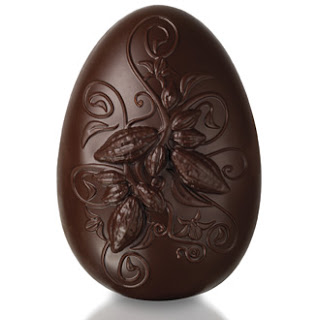
Why is Dark Chocolate Healthy?   Chocolate is made from plants, which means it contains many of the health benefits of dark vegetables. These benefits are from flavonoids, which act as antioxidants. Antioxidants protect the body from ageing caused by free radicals, which can cause damage that leads to heart disease. Dark chocolate contains a large number of antioxidants (nearly 8 times the number found in strawberries). Flavonoids also help relax blood pressure through the production of nitric oxide, and balance certain hormones in the body. In honour of Halloween, a day when many of us are indulging in sweet treats, I thought I'd write about the health benefits of chocolate. Dark chocolate is especially beneficial. In fact, many experts recommend eating one or two ounces of dark chocolate every day. 1) Dark Chocolate is Good for Your Heart Studies show that eating a small amount of dark chocolate two or three times each week can help lower yo...

GOLD - making of Jewellery

Image
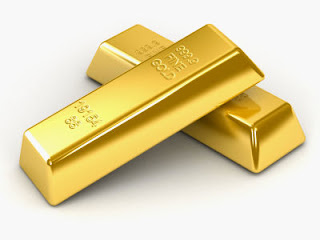
Details of what is gold and how or why Gold Jewelry is made in different Karats: The gold used in jewelry contains alloys. Various karat weights, including 10k, 14k, 18k and 22k, contain part zinc, copper, silver, or palladium. 18K gold is 750 percent pure, with 250 alloys added. Gold: Gold is a type of Precious metal whose chemical symbol is AU Temperature: The melting temperature of Gold is slightly lower than that of copper at 1945 ° F or 1063 ° C ( Iron is 2802°F and Copper is 1981°F ) Specific Gravity: of gold is 19.32 Density: One cubic inch of pure gold weighs 10.18 troy ounces. Weight: Gold for Jewelry purposes is weighed in Grams, Pennyweight (DWT) or Ounces (troy) 1 Troy ounce is equal to 31.10348 grams or 20 DWT (pennyweight) 1 DWT (pennyweight) is equal to 1.555 grams or 0.05 troy ounces. Karat: The most popular jewelry made in gold is 10 karat,14 karat, 18 karat and 22 karat gold Jewelry. Purity: The purest form of Gold considered 24 karats is equal...

Indian Government Departments

Image
Websites of  Indian Government Departments, Undertakings and other Agencies President of India Vice President of India Cabinet Secretariat Directorate of Public Grievances Performance Management Prime Minister's Office Department of Ocean Development Department of Atomic Energy        Nuclear Fuel complex Department of Development of North Eastern Region Directorate of Atomic Minerals Central Public Works Department Prime Minister's Councils Council on Trade & Industry Economic Advisory Council Group on Telecommunications Central Ministries Agriculture Department of Agriculture and Cooperation Department of Agricultural Research and Education Department of Animal Husbandry and Dairying Department of Food Processing Industries Chemicals and Fertilizers Department of Chemicals and Petrochemicals Department of Fertilizers Civil Aviation Directorate General of Civil Aviation Coal Commerce and Industry D...